
Best Food for Dogs with Allergies in 2026
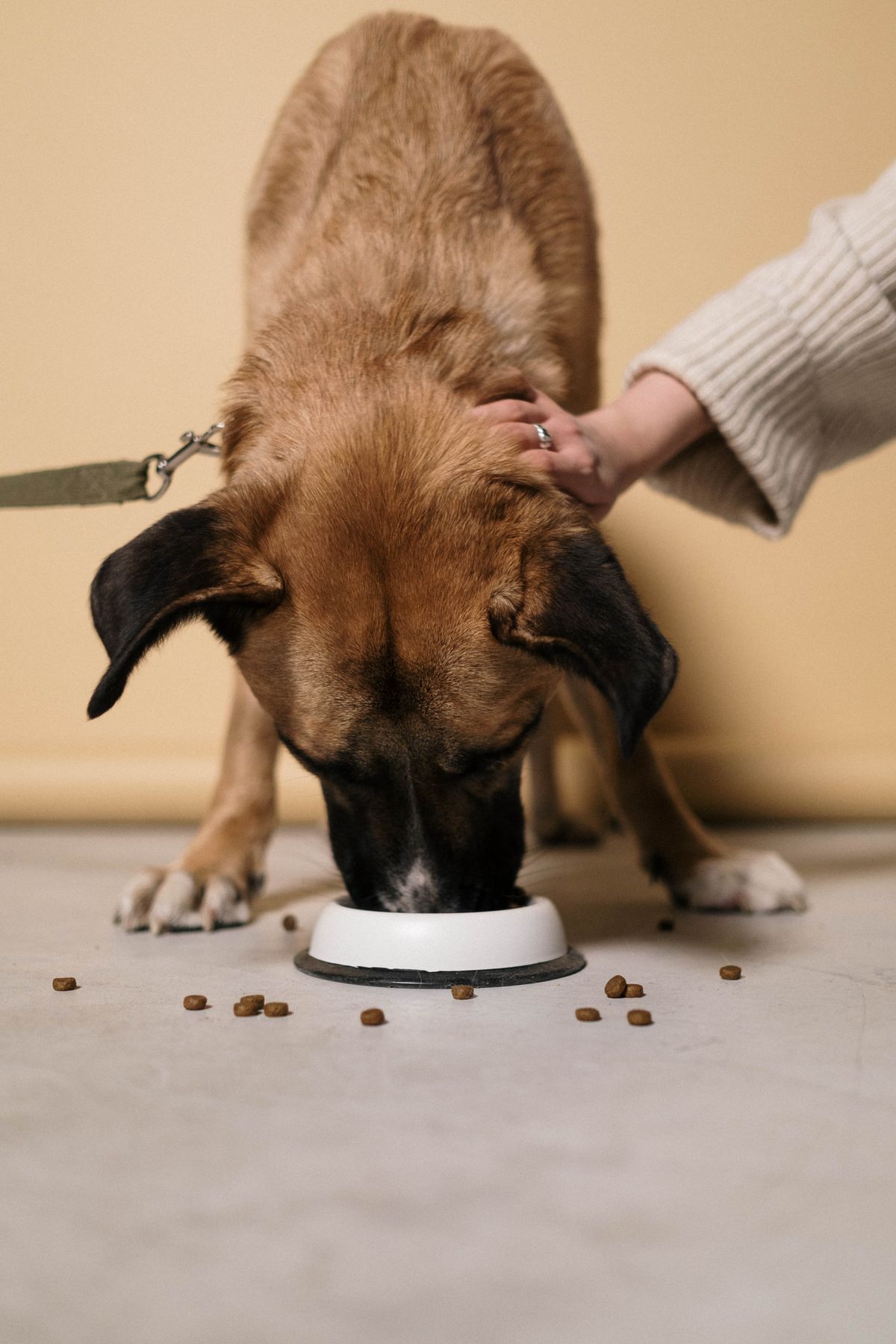
A brown dog eating kibble from a bowl while being petted. Photo: Pexels.
If your dog is constantly scratching, licking its paws, or getting ear infections, food could be the cause — or it could have nothing to do with food at all. That uncertainty is what makes dog allergies so frustrating. Owners spend hundreds of dollars switching foods, and half the time the itching is caused by something else entirely — pollen, dust mites, or fleas.
This guide explains how to tell whether food is really the problem, what the most common food allergens are, which foods actually help dogs with allergies. Prices are typical US ranges and vary by store and state.
Signs Your Dog Has a Food Allergy
Food allergies in dogs usually show up on the skin, not in the stomach. The most common signs are:
- Constant itching, especially around the face, ears, belly, and paws
- Recurring ear infections, often in both ears
- Licking or chewing the paws until they are red or raw
- Hot spots — red, inflamed patches of skin that appear suddenly
- Hair loss around the eyes, muzzle, or belly
- Vomiting, diarrhea, or excessive gas, sometimes alongside the skin symptoms
It is important to know that true food allergies are less common than most owners think. Food allergies account for only about 10 percent of all allergies in dogs. Environmental allergies — pollen, dust mites, mold, and flea bites — are far more common, and they cause exactly the same symptoms. If your dog itches mostly in spring and summer, the cause is probably environmental, not food. If the itching is year-round and does not respond to flea control, food is more likely.
A food allergy is also different from a food intolerance. An allergy is an immune system reaction. An intolerance is a digestive problem — the food upsets your dog's stomach, but the immune system is not involved. Both can cause vomiting and diarrhea, but only an allergy typically causes the itchy skin and ear infections.
The Most Common Food Allergens
In dogs, a small group of ingredients causes the vast majority of food allergies:
- Chicken — the most common food allergen in dogs, partly because it is in almost every dog food
- Beef — the second most common
- Dairy — milk, cheese, and other dairy products
- Wheat — a common allergen, though less common than chicken or beef
- Soy and corn — less common than people think, but they do cause allergies in some dogs
- Eggs — a less common but real allergen
Notice what is not on this list: lamb, fish, and rice are rarely the problem. That is why so many allergy diets are built around a single "novel" protein — a protein your dog has probably never eaten before, like salmon, duck, venison, or rabbit — plus a single carbohydrate, like sweet potato or rice.
Limited Ingredient, Novel Protein, or Hydrolyzed — What Is the Difference?
When you shop for allergy food, you will see three terms. They are not the same thing.
Limited ingredient diets (LID) use as few ingredients as possible — usually one protein and one carbohydrate. The idea is simple: fewer ingredients means fewer things your dog can react to. LID foods are available over the counter at pet stores, and they are the usual first step.
Novel protein diets use a protein your dog has never eaten. If your dog has eaten chicken and beef all its life, a food based on salmon, duck, venison, or rabbit gives the immune system nothing familiar to react to. Many LID foods are also novel protein diets.
Hydrolyzed protein diets go one step further. The protein is broken down into pieces so small that the immune system cannot recognize it at all. These are the most reliable option for a dog with a confirmed food allergy, but they are prescription only — you need your vet to authorize them. Hill's z/d and Royal Canin Hydrolyzed Protein are the two most common.
For most dogs, a good over-the-counter limited ingredient food is enough. If that does not work after a proper trial, your vet may recommend a hydrolyzed diet.
A Warning About Grain-Free Food
Many owners switch to grain-free food when their dog itches, assuming grain is the problem. In most cases, it is not — chicken, beef, and dairy are far more likely to be the problem than grain.
There is also a real safety concern. From 2018 to 2022, the FDA investigated a possible link between grain-free diets and dilated cardiomyopathy (DCM), a serious heart condition, in dogs — including Golden Retrievers. The diets most often involved were grain-free foods that used peas, lentils, or potatoes as main ingredients. The investigation did not prove that grain-free food causes DCM, but the pattern was strong enough that most veterinary cardiologists now recommend grain-inclusive food unless a grain allergy has actually been diagnosed.
Unless your vet has confirmed a grain allergy, choose a grain-inclusive allergy food. You get the benefit of a limited ingredient or novel protein formula without the heart risk.
A small brown dog eating from a bowl. Photo: Pexels.
The 5 Best Foods for Dogs with Allergies
| Food | Best for | Typical price (22–30 lb bag) | Key features |
|---|---|---|---|
| Hill's Science Diet Sensitive Stomach & Skin | Overall pick | $60–$75 | Prebiotic fiber, omega-6 and vitamin E, easy to digest, vet recommended |
| Purina Pro Plan Sensitive Skin & Stomach | Best value | $55–$70 | Salmon and rice, no corn, wheat, or soy, oatmeal for digestion |
| Blue Buffalo Basics Limited Ingredient | Best limited ingredient | $55–$70 | One protein, no chicken, no corn, wheat, soy, dairy, or eggs |
| Wellness Simple Limited Ingredient | Best for very sensitive dogs | $60–$75 | One protein and one carbohydrate, no fillers, no artificial anything |
| Natural Balance L.I.D. | Best variety of proteins | $50–$65 | Many protein options including salmon, duck, lamb, and venison |
Hill's Science Diet Sensitive Stomach & Skin is our overall pick because it is the most thoroughly tested option on this list, it is widely recommended by vets, and it works for both skin and stomach problems at the same time. It uses prebiotic fiber for digestion and omega-6 fatty acids and vitamin E for skin health.
Purina Pro Plan Sensitive Skin & Stomach is the best value. Its salmon and rice formula avoids the most common allergens, it includes oatmeal for gentle digestion, and it is usually a few dollars cheaper per bag than Hill's. It is also one of the easiest allergy foods to find in stores.
Blue Buffalo Basics is the best true limited ingredient diet. Each recipe uses a single animal protein and a short ingredient list, with no chicken, corn, wheat, soy, dairy, or eggs. If you want to control exactly what goes into your dog, this is the cleanest option.
Wellness Simple is the pick for dogs that react to almost everything. Its recipes are deliberately minimal — one protein, one carbohydrate, and a short list of supporting ingredients. It is a good choice when other limited ingredient foods have not worked.
Natural Balance L.I.D. is the best choice if you need to try several different proteins. It comes in salmon, duck, lamb, venison, and other options, so you can switch proteins without switching brands or formulas. That makes an elimination diet much easier to manage.
If your vet prescribes a hydrolyzed diet, Hill's z/d and Royal Canin Hydrolyzed Protein are the standard options. They cost more — typically $90 to $120 for a bag — and you need a prescription, but they are the most reliable food for a dog with a confirmed, severe food allergy.
How to Do an Elimination Diet
Switching foods for a week and deciding it did not work is the most common mistake owners make. A real food trial takes 8 to 12 weeks, and it has strict rules.
Step 1: Pick one food and stick to it. Choose a limited ingredient or novel protein food your dog has never eaten. Feed only that food and water — nothing else.
Step 2: Cut out everything else. No treats, no table scraps, no rawhide, no flavored medications, and no dental chews unless your vet confirms they are safe. A single chicken-flavored treat can ruin the entire trial.
Step 3: Wait 8 to 12 weeks. It takes that long for the allergens to clear your dog's system and for the skin to heal. Most owners see improvement in the first four to six weeks if food is the problem, but a full 12 weeks is the standard.
Step 4: Reintroduce one ingredient at a time. If your dog improves, add back one old ingredient for one to two weeks and watch for symptoms. If the itching returns, you have found the allergen. If it does not, that ingredient is probably safe.
Keep a simple diary during the trial: what your dog ate, how much it scratched, and whether the ears look better or worse. It is hard to remember 12 weeks of symptoms without writing them down.
When to See the Vet
See your vet before you start switching foods if your dog has open sores, a strong smell from the ears, hair loss over a large area, or vomiting and diarrhea that lasts more than a day. These can be signs of infection or a more serious problem that food alone will not fix.
Your vet can also check for the other common causes of itching — fleas, mites, and skin infections — and rule them out before you spend money on a food trial. A vet can prescribe medication to control the itching while you run the trial, which makes the whole process much more comfortable for your dog.
If you have tried two or three good allergy foods with proper 8 to 12 week trials and nothing has helped, ask for a referral to a veterinary dermatologist. They can run proper allergy testing and build a treatment plan that goes beyond food.
Frequently Asked Questions
How do I know if my dog has a food allergy or an environmental allergy? Food allergies usually cause year-round symptoms. Environmental allergies are often seasonal, worse in spring and summer, and may improve in winter. The only reliable way to diagnose a food allergy is an elimination diet trial of 8 to 12 weeks. Blood and saliva tests for food allergies are unreliable in dogs.
Is chicken the most common food allergy in dogs? Yes. Chicken is the most commonly reported food allergen in dogs, followed by beef and dairy. That is one reason so many allergy diets use salmon, lamb, duck, or venison instead.
Can I just cook for my dog instead of buying allergy food? Home-cooked diets can work, but they are hard to balance correctly. A homemade diet needs a veterinary nutritionist to design it, or your dog may end up deficient in calcium, vitamins, or essential fatty acids. For most owners, a commercial limited ingredient food is safer and easier.
How long does it take for an allergy food to work? Most owners see some improvement in four to six weeks, but a full trial takes 8 to 12 weeks. If there is no improvement at all after 12 weeks on a strict trial, food is probably not the main cause.
The Bottom Line
The best food for a dog with allergies is one with a short ingredient list, a protein your dog has never eaten, and no chicken, beef, dairy, or wheat. Hill's Science Diet Sensitive Stomach & Skin is the best all-around choice, Purina Pro Plan Sensitive Skin & Stomach is the best value, and Blue Buffalo Basics is the cleanest limited ingredient option.
But the food is only half the job. The other half is a proper elimination diet — one food, nothing else, for 8 to 12 weeks — and a vet visit to rule out the other causes of itching. Do both, and most dogs with food allergies get noticeably better. Skip the trial, and you will keep guessing.


Comments
Post a Comment