
How to Care for a Senior Dog: 7 Changes That Keep Your Old Dog Comfortable in 2026
Your dog used to sprint to the door. Now it takes a minute to stand up, the muzzle is going grey, and the stairs have become a negotiation. That moment — when you realize your dog is old — hits most owners somewhere between age 7 and 10, depending on the breed. Small dogs usually reach senior status around age 10 or 11. Medium dogs around 9 or 10. Large and giant breeds, like Great Danes and Mastiffs, can be seniors by age 6 or 7, because their bodies age faster.
The good news is that old age is not a disease. Most of what makes a senior dog uncomfortable — stiff joints, extra weight, bad teeth, confusion at night — can be managed with a few practical changes, and most of them cost less than one emergency vet visit. This guide covers the seven changes that matter most: food, exercise, vet care, your home, sleep, teeth, and the mental changes nobody warns you about.
The Short Answer
Caring for a senior dog comes down to seven changes: switch to a senior diet with fewer calories and joint support, replace long runs with two or three short walks a day, move vet visits to every 6 months with bloodwork, add ramps and non-slip rugs at home, give the dog a warm orthopedic bed, brush its teeth or budget for a dental cleaning, and watch for the early signs of canine cognitive dysfunction. Expect to spend about $100 to $200 a month on a healthy senior dog, and $200 to $400 a month once age-related conditions need medication.
1. Change the Food (and the Portions)
A senior dog's metabolism slows down, but its appetite usually does not. The result is the most common senior dog problem in America: weight gain. An overweight senior dog puts extra load on already worn joints, and studies consistently show that overweight dogs live shorter lives — about 6 to 12 months shorter on average.
What to change:
- Switch to a senior formula around age 7 (earlier for giant breeds, later for small breeds). Senior foods typically have 10 to 20 percent fewer calories than adult formulas, plus added glucosamine and omega-3 fatty acids for joints. Good options in 2026: Hill's Science Diet Adult 7+ ($55–$70 for a 15-pound bag), Purina Pro Plan Bright Mind 7+ ($50–$65), or Royal Canin Size Health Nutrition Aging ($60–$80). Prices are typical US ranges and vary by store and state.
- Measure every meal. Stop free-feeding. A kitchen scale or a measuring cup is the cheapest health tool you own. Most senior dogs need about 20 to 30 percent fewer calories than they did at age 3.
- Feed twice a day, not once. Two smaller meals are easier on an aging digestive system and reduce the risk of bloat in large breeds.
- Ask your vet before adding supplements. Fish oil (about $15–$25 a month) and glucosamine-chondroitin chews ($20–$40 a month) help many arthritic dogs, but they are not a substitute for weight control, and some interact with medications.
Watch for the opposite problem too. A senior dog that suddenly loses weight, eats less, or drinks much more water than usual needs a vet visit — those are classic early signs of kidney disease, diabetes, or thyroid problems.
2. Change How Your Dog Exercises
The worst thing you can do to a senior dog is stop exercising it. The second worst thing is to keep exercising it the way you did when it was three. Joints that are stiff in the morning loosen up with gentle movement, but a 5-mile run on a Saturday will leave an arthritic dog limping until Tuesday.
The new exercise plan:
- Two or three short walks a day, 15 to 20 minutes each, instead of one long outing. Let the dog set the pace and sniff as much as it wants — sniffing is mental exercise too.
- Swimming is the best senior exercise there is. It builds muscle with almost no impact on the joints. Many vet rehab clinics offer swim sessions for $30–$60 a visit, and some dog pools rent by the hour.
- Warm up and cool down. Give the dog 5 minutes of slow walking before any faster movement, and watch for the signs that it has had enough: lagging behind, lying down mid-walk, heavy panting that does not ease in a few minutes.
- Keep the mind working. Puzzle feeders, snuffle mats, and short training sessions (5 minutes, twice a day) fight boredom and slow cognitive decline. A Kong stuffed with frozen peanut butter costs about $10 and buys you 20 minutes of calm focus.
3. Double the Vet Visits
An adult dog sees the vet once a year. A senior dog should go every 6 months. Six months in a senior dog's life is roughly equivalent to 3 or 4 years in a human's — a lot can change between visits, and most age-related diseases are far cheaper to treat when they are caught early.
What a senior checkup should include:
- Bloodwork and urinalysis once a year ($150–$300): catches kidney disease, liver problems, diabetes, and thyroid issues before symptoms appear.
- A dental check at every visit: 80 percent of dogs have periodontal disease by age 3, and it only gets worse. A professional cleaning under anesthesia costs $300–$800 in 2026, but untreated dental disease seeds bacteria into the heart, liver, and kidneys.
- Weight, joints, eyes, and hearing: ask your vet to check mobility, look for lumps, and test vision and hearing. Catching a cataract or a tumor early changes the options completely.
- Vaccines and parasite prevention stay on schedule. Older immune systems are weaker, not stronger — skipping prevention is a false economy.
Budget about $400 to $800 a year for routine senior vet care, before any medication. If that sounds like a lot, compare it with one emergency visit for a dog in crisis, which routinely runs $2,000 to $5,000.
4. Make Your Home Senior-Friendly
Your house was designed for a young dog. A senior dog with stiff hips, poor vision, and weaker bladder control experiences it very differently. A few cheap changes make a big difference:
- Ramps, not jumps. A folding ramp for the car costs $40–$120 and saves your dog's joints every single trip. A small ramp or pet stairs ($30–$80) for the bed or sofa does the same at home. Stop letting an old dog jump down from the car or the bed — the landing is what hurts.
- Non-slip rugs on slick floors. Hardwood and tile are ice rinks for a dog with weak hind legs. Runner rugs in hallways and a rug by the food and water bowls cost $20–$50 and prevent the falls that cause real injuries.
- Night lights. Senior dogs often lose vision, and a dark hallway at 2 a.m. is frightening. A $5 plug-in light near the stairs and the back door helps more than you would expect.
- Raise the food and water bowls. An elevated feeder ($20–$40) means the dog does not have to bend its neck down to eat — a real relief for dogs with arthritis in the neck and shoulders.
- A dog door or more frequent outings. Senior dogs need to go out more often, and holding it too long causes accidents and urinary infections. If you are away during the day, a midday dog walker ($15–$25 a visit) is cheaper than cleaning carpets and treating infections.
5. Upgrade the Bed
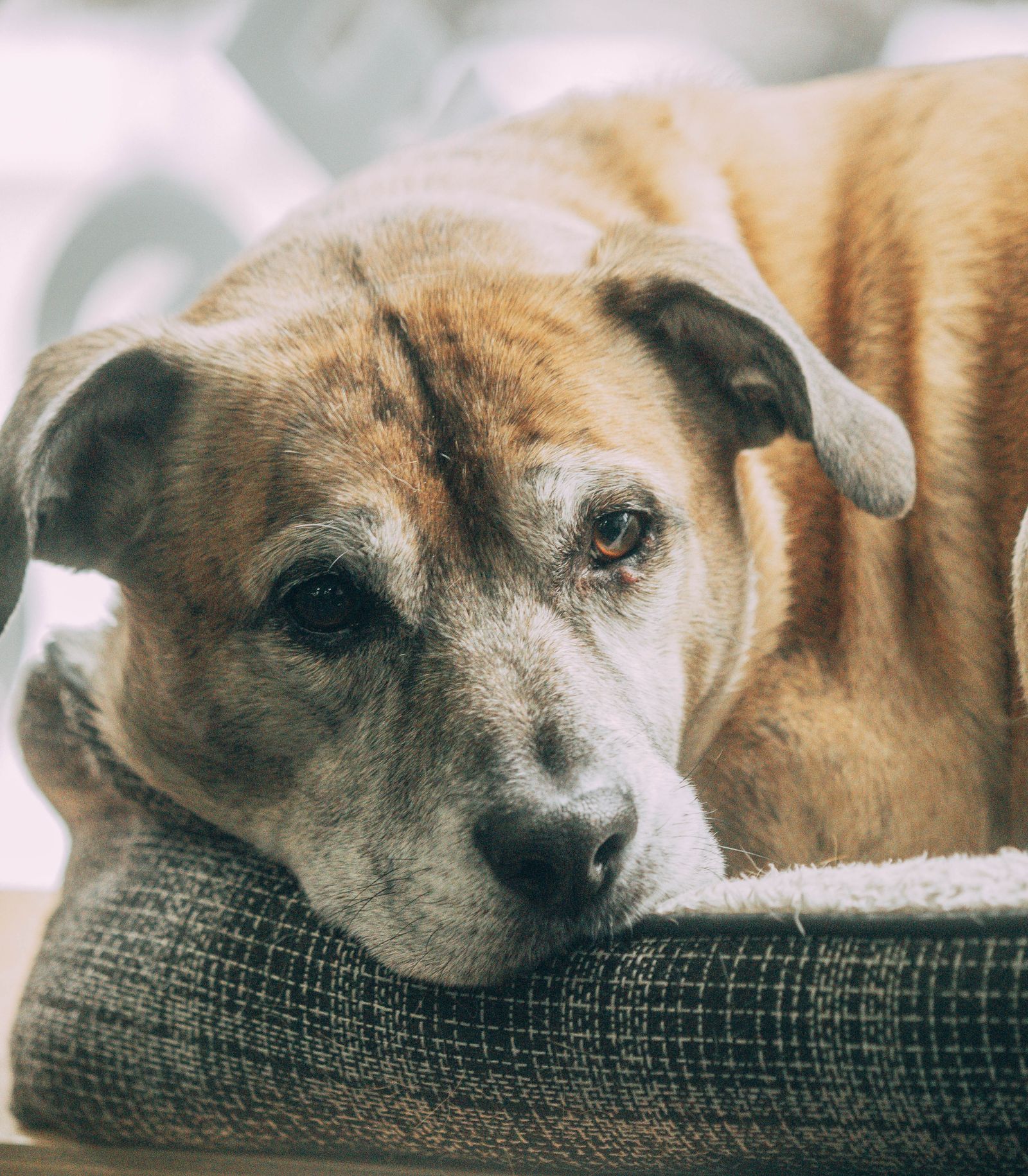
A senior dog sleeps 16 to 20 hours a day, and a thin bed on a cold floor is the difference between waking up stiff and waking up ready to move. This is the one purchase where spending more is genuinely worth it.
What to look for:
- Orthopedic memory foam, at least 4 inches thick ($80–$280 for large dogs): it supports the joints instead of letting them press against the floor. The Big Barker bed ($240–$280) is the benchmark for large breeds, with a 10-year warranty on the foam.
- A washable, waterproof cover: older dogs have accidents, and a bed you cannot wash becomes a smell problem in a week.
- A warm spot, away from drafts: put the bed in a quiet corner the dog already likes, not in the middle of the action. Senior dogs need undisturbed sleep, and they need to be able to get up and reach water and the door without crossing the whole house.
6. Watch the Mind, Not Just the Body
Canine cognitive dysfunction — dog dementia — affects about 28 percent of dogs aged 11 to 12, and 68 percent of dogs aged 15 to 16. It creeps in slowly, and owners often mistake the early signs for stubbornness or bad behavior.
The early signs to watch for:
- Staring at walls or into corners, or getting stuck behind furniture
- Pacing or restlessness at night, sleeping all day
- Forgetting house training after years of being reliable
- Not recognizing familiar people or seeming confused in familiar places
- Less interest in playing, greeting you, or seeking attention
There is no cure, but there is real help. A diet rich in omega-3s and antioxidants, daily mental stimulation, a strict routine (same walk times, same feeding times, same sleeping spot), and medications like selegiline ($30–$60 a month) can slow the decline and give you more good months. If you notice any of the signs above, tell your vet — the earlier you start, the better it works.
7. Adjust Your Expectations — and Your Routine
The hardest part of caring for a senior dog is not medical. It is emotional. Your dog cannot do the things it used to do, and the dog knows it. The best thing you can give an old dog is patience and a predictable routine.
What that looks like in practice:
- Keep the routine boring. Same wake-up time, same walk route, same feeding times. Predictability is calming for a dog whose senses are fading.
- Be patient with slowness. Let the dog sniff for five minutes on a walk. Wait while it gets up. Carry it up the stairs if it needs help — that is not spoiling, it is care.
- Keep including the dog. An old dog that is left alone all day declines faster than one that is part of family life. Bring the bed into the room where you are. Talk to the dog. A senior dog's world is shrinking; your job is to keep it as big as possible.
- Decide your limits in advance. Talk with your vet about what quality of life means for your dog — eating, drinking, moving without pain, recognizing you, enjoying at least one thing a day. Writing it down before a crisis makes the hardest decisions clearer when they come.
How Much Does Senior Dog Care Cost?
For planning purposes, here is what a typical healthy senior dog costs per month in the US in 2026:
| Item | Monthly cost |
|---|---|
| Senior food | $50–$80 |
| Joint supplement + fish oil | $30–$60 |
| Vet care (averaged, 2 visits + bloodwork) | $35–$65 |
| Flea, tick, and heartworm prevention | $30–$50 |
| Bed, ramps, and home changes (amortized) | $10–$20 |
| Typical total | $155–$275 |
Add $50–$150 a month if your dog needs daily arthritis medication, thyroid pills, or cognitive support. Pet insurance helps if you bought it when the dog was young — but most insurers will not cover pre-existing conditions, so a policy bought at age 10 rarely pays for the conditions an old dog already has.
Frequently Asked Questions
When is my dog considered a senior? It depends on size. Small dogs (under 20 pounds) are seniors around age 10 or 11. Medium dogs around 9 or 10. Large dogs around 8. Giant breeds around 6 or 7. Your vet can give you a more precise answer based on your dog's breed and health.
How often should a senior dog see the vet? Every 6 months, with bloodwork and a urinalysis once a year. That schedule catches kidney disease, diabetes, and thyroid problems early, when treatment is cheapest and most effective.
Should I change my senior dog's food? Yes, in most cases — to a senior formula with fewer calories and added joint support, around age 7 for most dogs. But if your dog is already underweight or has kidney disease, ask your vet first: some senior formulas are wrong for those conditions.
How much exercise does a senior dog need? About 30 to 60 minutes a day, split into two or three short, gentle walks. Swimming is ideal. Stop if the dog lags behind, lies down, or pants heavily — and never exercise a senior dog in hot weather the way you would a young one.
Is it normal for a senior dog to sleep all day? Senior dogs sleep 16 to 20 hours a day, and that is normal. What is not normal is a sudden change — a dog that slept 14 hours and now sleeps 22, or a dog that paces all night and cannot settle. Sudden changes deserve a vet visit.
The Bottom Line
Caring for a senior dog is not about fighting old age. It is about adjusting: lighter food, shorter walks, twice-yearly vet visits, a ramp instead of a jump, a warm bed, clean teeth, and a routine your dog can count on. None of these changes is expensive on its own, and together they buy something no medicine can — more comfortable months with the dog that has been with you for a decade.
The grey muzzle is not the end of the story. For many dogs, the senior years are the sweetest ones: calmer, closer, and full of quiet routines. Your dog gave you its best years. These changes are how you give the best years back.


Comments
Post a Comment