
Dog Torn ACL: The Signs, the Surgery Options, and What It Costs in 2026
My neighbor's Labrador, Biscuit, tore his ACL chasing a tennis ball. Not in some dramatic leap off a cliff — on a flat patch of grass, on a Tuesday, doing the thing he had done a thousand times before. One second he was sprinting after the ball, the next he yelped, pulled up short, and held his back left leg off the ground like it had betrayed him. My neighbor carried a 78-pound dog to the car, drove to the emergency vet, and came home with two pieces of news: the ligament in Biscuit's knee was torn, and fixing it would cost about $4,800. He asked me the question every owner asks in that moment, the one nobody can answer in the parking lot: is the surgery worth it, and which one?
A torn ACL — veterinarians call it a torn CCL, for cranial cruciate ligament — is the most common knee injury in dogs, and one of the most common reasons a dog suddenly starts limping on a back leg. It is also one of the most expensive injuries a dog owner will ever face. This guide covers what the ligament does, the signs that it has torn, the three surgery options and what each one costs in 2026, the recovery nobody warns you about, and the honest math on whether surgery is the right call for your dog.

A dog that suddenly holds a back leg up or walks stiffly on it may have torn the ligament in its knee. The limp often looks worse after rest and better once the dog warms up. Photo: Pexels.
The Short Answer
Dogs do not technically have an ACL — that is the human name. Dogs have a cranial cruciate ligament, or CCL, a small band inside the knee that keeps the shin bone from sliding forward under the thigh bone. When it tears, the knee becomes unstable, the joint grinds, and the dog limps. Most tears are not caused by one bad jump. They are the end of a slow process: the ligament frays and weakens over months or years, and then one ordinary movement — a turn on the stairs, a jump off the couch, a sprint after a ball — finishes it.
Surgery costs $2,250 to $6,400 per knee in 2026, depending on the procedure. The most common operation, TPLO, averages $3,525 nationally, with a range of about $2,793 to $6,417 depending on where you live. A lateral suture repair at a general practice runs $2,250 to $3,200. TTA, the third option, runs around $4,500. Specialty hospitals in big cities can quote $7,500 or more, and in Southern California, large referral hospitals charge $8,000 to $10,000 per knee. Recovery takes at least three months of restricted exercise, and about 9 out of 10 dogs return to close to normal function after TPLO — but roughly 30 to 50 percent will tear the ligament in the other knee within a year or two, so the bill you are looking at may eventually double.
What the Ligament Does, and Why It Tears
The knee — the stifle, in vet language — is a hinge joint, and the cranial cruciate ligament is the rope that holds it together. It connects the femur (thigh bone) to the tibia (shin bone) and stops the tibia from sliding forward every time the dog puts weight on the leg. Without it, the joint wobbles with every step. The meniscus, the cartilage cushion inside the knee, gets pinched and torn by the instability. Arthritis sets in fast — within weeks, not years — and it does not go away.
In people, ACL tears are usually sports injuries: a bad landing, a twist, a tackle. In dogs, it is usually the opposite. Most canine CCL tears are degenerative. The ligament slowly weakens with age, with weight, and with genetics, and the tear is the final straw. That is why the classic patient is not a young athlete. It is a five-to-seven-year-old Labrador, Golden Retriever, Rottweiler, Staffordshire Terrier, or Boxer who is ten pounds overweight and has been slowing down on the stairs for a while. Large and giant breeds tear it most often. Small dogs tear it too, but less often, and they have more options.
The risk factors are worth knowing because two of them are in your control:
- Weight. An overweight dog loads the ligament with every step. A dog that is 15 percent over its ideal weight is carrying that extra load on a ligament that was not designed for it. Weight is the single biggest risk factor you can change, and it matters before the injury as much as after it.
- Breed and genetics. Labradors, Goldens, Rottweilers, Staffordshire Bull Terriers, Boxers, and several giant breeds tear the ligament far more often than average. If you own one of these breeds, a limp on a back leg should never be brushed off.
- Age. Most tears happen between ages five and seven, when the ligament has had years to weaken.
- Early spay or neuter. Some studies link very early sterilization with a higher rate of cruciate injury, probably because sex hormones affect how the bones and ligaments develop. The evidence is real but not settled, and it is not a reason to skip sterilization — it is a reason to talk to your vet about timing if you have a large-breed puppy.
- The other knee. Once one side tears, the dog shifts its weight to the good leg, and the good leg's ligament takes double duty. That is why 30 to 50 percent of dogs tear the second side within one to two years.
The Signs: What a Torn ACL Looks Like
A torn ACL rarely announces itself politely. Here is what owners usually see, in the order they usually see it:
The sudden limp. The dog is fine, and then it is not. It yelps during play or on the stairs, then holds the back leg up or walks on three legs. Some dogs put the leg down and walk on it within minutes. Some will not bear weight on it at all. Both can be a torn ligament. A dog that will not put weight on a back leg after an incident needs a vet visit, not a wait-and-see weekend.
The limp that comes and goes. This is the pattern that fools people. The dog limps badly in the morning, looks fine by afternoon, limps again after a long walk or a game of fetch. The ligament may be partially torn — frayed but not fully snapped — and the knee is unstable enough to hurt but stable enough to walk on. A partial tear is still a tear, and it usually becomes a full tear. A limp that keeps coming back on the same leg is a vet visit, full stop.
The sit test. Dogs with a torn CCL often sit with the bad leg stuck out to the side instead of tucked under them, because tucking it hurts. If your dog has started sitting like a frog on one side, pay attention.
Stiffness after rest. The dog is stiff and slow getting up from a nap, then loosens up after a few minutes of walking. Owners often blame age or the cold. Sometimes it is age. Sometimes it is a knee that is quietly falling apart.
Clicking or popping. A clicking sound from the knee when the dog walks can mean the meniscus — the cartilage pad inside the joint — is damaged. Not every click is a meniscus tear, but a new click plus a limp is worth a vet visit.
Swelling and muscle loss. The knee may look puffy compared to the other side. Over weeks, the thigh muscle on the injured leg visibly shrinks, because the dog is not using the leg. If one thigh looks thinner than the other, the injury has been going on longer than you thought.
The dog that stops doing things. It stops jumping on the bed. It hesitates at the stairs. It will not chase the ball anymore, or it chases it once and quits. Dogs do not fake disinterest in their favorite things. When a Lab stops chasing a ball, something hurts.
What to Do First
If your dog suddenly starts limping on a back leg, the first 48 hours matter more than most owners realize:
Rest the dog now, and mean it. No fetch, no stairs, no jumping on and off the couch, no off-leash running. Short leash walks to go to the bathroom, and back inside. A torn ligament gets worse with every unstable step, and the meniscus — the part that is hardest to fix — tears when the unstable knee keeps moving. Use a ramp or carry the dog if you can. Keep it on the ground floor.
Do not test the leg. Do not bend it, pull it, or press on the knee to see if it hurts. You will not diagnose anything, and you can make it worse. The vet has specific hands-on tests for this — the cranial drawer test and the tibial thrust test — and they need a relaxed dog and a trained hand.
Book the vet this week, not next month. A torn ACL is not a same-night emergency in the way bloat is, but it is not a "wait and see" injury either. Every week of limping is a week of arthritis building in the joint and a week of the other leg taking double load. Call your regular vet first — they can usually confirm the diagnosis with an exam and X-rays. If surgery is needed, they will refer you to a surgeon.
Do not give human painkillers. Ibuprofen and acetaminophen are toxic to dogs. If the dog seems painful, call the vet and ask what to give and how much. Many vets will prescribe a dog-safe anti-inflammatory over the phone for an established patient.
The Diagnosis: Exam, X-Rays, and the Bill
Diagnosis is usually straightforward. The vet feels the knee for the drawer sign — the shin bone sliding forward when it should not — and checks for the tibial thrust. X-rays confirm the diagnosis indirectly: they show joint swelling, arthritis, and whether the bones are aligned, and they rule out fractures and tumors. An exam plus X-rays typically costs $250 to $600, depending on the clinic and how many views are taken. Sedation is sometimes needed, because a dog in pain will not hold still for a proper drawer test, and that adds $100 to $200.
Some surgeons also recommend an MRI or a CT scan for complicated cases, but most TPLO decisions are made on the exam and X-rays alone. Ask for a written estimate before you agree to anything. A good clinic will give you one without being asked.
The Three Surgeries, Compared Honestly
There are three standard operations. They are not three versions of the same thing — they work in completely different ways, and the right one depends on the dog's size, age, activity level, and your budget.
| Procedure | Typical cost (2026) | Best for | How it works |
|---|---|---|---|
| Lateral suture (extracapsular repair) | $2,250–$3,200 | Small dogs, usually under 35 lbs | A strong nylon line is placed outside the joint to mimic the ligament |
| TPLO (tibial plateau leveling osteotomy) | $3,525 average; $2,793–$6,417 range | Medium and large dogs; the most common choice | The top of the shin bone is cut, rotated to a flatter angle, and fixed with a plate |
| TTA (tibial tuberosity advancement) | Around $4,500 | Medium and large dogs; an alternative to TPLO | The front of the shin bone is moved forward to change the forces on the knee |
Lateral suture is the oldest and cheapest option. The surgeon places a heavy nylon suture outside the joint to stabilize the knee while scar tissue forms. It works well in small dogs — under about 35 pounds — and it is the only one of the three that a general practice vet commonly performs, which keeps the price down. In large dogs, the suture stretches and the repair fails more often, which is why most surgeons will not recommend it for a 70-pound Lab. Think of it as a good repair for a small dog and a gamble for a big one.
TPLO is the current gold standard for medium and large dogs, and it is the operation most surgeons recommend first. Instead of replacing the ligament, the surgeon changes the geometry of the knee: the top of the shin bone is cut, rotated to a flatter angle, and held in place with a titanium plate and screws. With the angle changed, the ligament is no longer needed to keep the joint stable. The published numbers are strong — roughly 9 out of 10 dogs return to close to normal function — and it holds up in big, active dogs. The price reflects that it is a specialist operation: national average $3,525, with state averages from about $2,830 in Mississippi to $6,332 in Hawaii. California averages about $4,701, New York $4,182, Texas $3,126, Massachusetts $4,906. One Ohio surgery practice lists a total of $4,297 for dogs up to 90 pounds and $4,789 above 90 pounds, including the consultation, surgery, and routine follow-ups. At a large specialty hospital in Southern California, expect $8,000 to $10,000 per knee.
TTA changes the forces on the knee a different way, by moving the front of the shin bone forward. It costs around $4,500 at the hospitals that publish prices, and it is a solid alternative to TPLO, especially for dogs whose knee shape suits it. Some surgeons prefer it; most prefer TPLO. For the owner, the practical difference is small — recovery, restrictions, and long-term results are similar.
Bilateral surgery — both knees at once — is worth asking about if both knees are already damaged. Doing both under one anesthesia runs about $6,000, versus about $7,000 for two separate surgeries, and it means one recovery instead of two. Not every dog is a candidate, and not every surgeon offers it, but if your vet has already warned you the second knee is going, it is a real saving.
What Surgery Does Not Include
The surgery quote is not the whole bill. Budget for the extras, because they are not optional:
- Diagnosis: exam plus X-rays, $250–$600.
- Pre-surgery bloodwork: usually $100–$250.
- Pain medication to go home: $50–$150 for the first two weeks.
- Follow-up X-rays: most surgeons want X-rays at 6 to 8 weeks to confirm the bone is healing. Each set runs $150–$350.
- Rehabilitation: physical therapy runs $50–$100 per session, and most dogs benefit from 6 to 12 sessions. Underwater treadmill work is the single best thing you can buy for a recovering knee, and it is usually $60–$90 a session.
- The second knee: if it tears within a year or two — and the odds are 30 to 50 percent — you pay for the whole thing again.
A realistic all-in number for one TPLO knee, including diagnosis, surgery, medication, follow-up X-rays, and a basic rehab course, is $4,500 to $7,000 at a typical clinic, and $9,000 to $12,000 at a big-city specialty hospital. That is the number to plan around, not the surgery quote alone.
The Non-Surgical Option: When Rest and Rehab Can Work
Surgery is not the only answer, and for some dogs it is not the best answer. Conservative management — strict rest, weight loss, anti-inflammatory medication, joint supplements, and structured physical therapy — can work, but the honest version is this: it works best in small dogs under about 35 pounds, and in older dogs where anesthesia is risky. A 20-pound Beagle with a partial tear can often return to a comfortable life without surgery. A 90-pound Rottweiler almost never can.
A custom knee brace is the other non-surgical option. A properly fitted brace runs $700 to $1,500, and it can stabilize the knee well enough for daily life. It is not a substitute for surgery in an active large dog, but for an older dog, a dog with other health problems, or an owner who genuinely cannot afford surgery, it is a legitimate choice — far better than doing nothing and letting the dog limp. The catch is the fitting: a brace bought online and guessed at will rub, slip, and do nothing. A custom brace fitted by a vet rehab specialist is the only kind worth the money.
Conservative management costs roughly $500 to $1,500 over the first few months — medication, a few rehab sessions, a brace if you go that route — and then the ongoing cost of weight management and joint supplements. It is cheaper than surgery. It is also slower, less reliable in big dogs, and it does not stop arthritis. If you go this route, commit to it properly: the rest has to be strict, the weight has to actually come off, and the rehab has to happen. Half-hearted rest is how a partial tear becomes a full tear.
Recovery: The Three Months Nobody Warns You About
Here is the part the surgeon mentions quickly and the owner discovers slowly: the surgery is the easy part. The recovery is the job.
Weeks 1–2: crate rest, and I mean rest. The dog goes out on a leash to go to the bathroom and comes straight back in. No stairs, no couch, no playing, no off-leash anything. The incision needs to stay clean and dry. Most dogs feel dramatically better within a week — the pain is gone, the leg works again — and this is exactly when owners make the mistake. A dog that feels good will try to run. Do not let it. The bone is healing, not healed.
Weeks 3–6: short leash walks, slowly getting longer. Five minutes, then ten, then fifteen, all on leash, all on flat ground. Physical therapy usually starts around week two or three: gentle range-of-motion work, then underwater treadmill if you have access to it. This is the phase where rehab pays for itself — dogs that do structured rehab recover faster and more completely than dogs that just rest.
Weeks 6–12: building back. Follow-up X-rays around week eight confirm the bone has healed. Walks get longer. Short, controlled play returns. Hills and stairs come back gradually, not all at once. Swimming is excellent — it builds muscle without loading the joint — but only once the incision is fully healed and the surgeon says so.
Weeks 12–16: back to normal, mostly. Most dogs are back to normal activity by three to four months. High-impact activity — jumping, sharp turns, fetch at full speed — should wait until the surgeon clears it, and for some dogs it never fully comes back. The knee will always have some arthritis. The goal is a dog that walks, runs, and plays without pain, not a dog that is exactly the dog it was at age two.
The single most important recovery rule is the one owners break most: the leash stays on for eight weeks, even in the yard. A squirrel, a doorbell, a visiting dog — one sprint in week three can undo a $4,000 surgery. Crate the dog when you cannot watch it. Use a baby gate at the stairs. It is twelve weeks of inconvenience for ten years of a working leg.
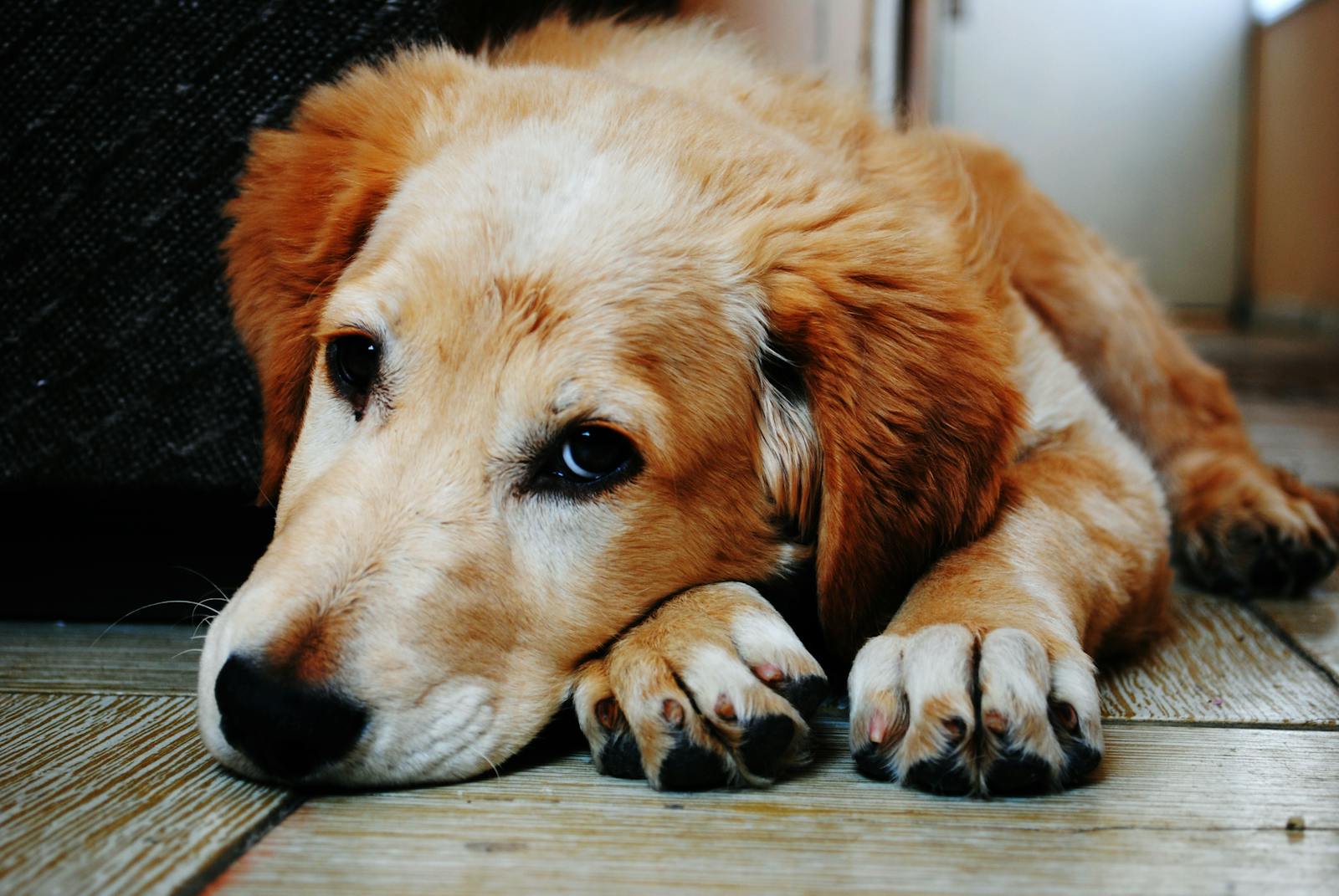
Recovery is mostly rest: leash walks only, no stairs, no jumping, for at least eight weeks. The dogs that heal best are the ones whose owners enforce the boring part. Photo: Pexels.
Pet Insurance and the Pre-Existing Problem
If your dog already has insurance, a torn ACL is usually covered — cruciate surgery is one of the most common claims insurers pay, and the average emergency claim for dogs runs about $653, with cruciate claims running far higher. But there are two catches. First, the waiting period: most policies have a 6-to-12-month waiting period specifically for cruciate ligament injuries, precisely because they are so common and so expensive. Second, once the knee is injured, it is a pre-existing condition. If you switch insurers after the first tear, the second knee — the one with a 30 to 50 percent chance of tearing — may not be covered at all.
If your dog does not have insurance yet and you own a Labrador, Golden, Rottweiler, or Boxer, this is the injury that makes the monthly premium look cheap. A policy at $40 to $70 a month that covers a $5,000 surgery pays for itself many times over. Just read the cruciate waiting period before you buy, and enroll the dog while both knees are still healthy.
Prevention: What Actually Helps
You cannot change your dog's breed or its genes. You can change three things that genuinely lower the risk:
- Keep the dog lean. A dog at a healthy weight puts measurably less force through the knee with every step. You should be able to feel the ribs easily under a thin layer of fat, and the dog should have a visible waist from above. If you cannot feel the ribs, the dog is overweight, and the ligament knows it.
- Build strength, not just stamina. Strong thigh and hip muscles stabilize the knee. Hill walks, swimming, and controlled balance work build the muscles that protect the ligament. Weekend-warrior exercise — a sedentary week followed by two hours of fetch on Saturday — is the worst pattern: a tired dog with weak muscles makes the awkward turn that tears the ligament.
- Use ramps and stop the jumping. Every jump off the bed, out of the car, and down the porch steps loads the knee. A ramp for the car costs $60 to $150 and takes the single hardest daily impact out of the dog's life. For a large breed over age five, that is cheap insurance.
The Bottom Line
A torn ACL is the most common knee injury in dogs, and it is also one of the most expensive: $2,250 to $6,400 per knee, with TPLO averaging $3,525 nationally. The signs are a sudden limp on a back leg, a limp that comes and goes, sitting with the leg stuck out, stiffness after rest, and a dog that quietly stops doing the things it loves. The first move is rest and a vet visit within the week — not a wait-and-see month. TPLO is the best option for most medium and large dogs, lateral suture is a good and cheaper option for small dogs, and conservative management with rest, weight loss, and rehab can work for small or older dogs. Recovery is three months of strict rest and leash walks, and the dogs that heal best are the ones whose owners enforce the boring part.
Biscuit had the TPLO. It cost $4,800 all in, including the follow-up X-rays and six rehab sessions. He spent eight weeks on a leash in the yard, looking offended every single day. At four months he was chasing the ball again — slower, and never at full sprint on wet grass, because my neighbor learned that lesson too. The other knee is still holding, two years on. My neighbor keeps Biscuit lean, walks him on hills instead of throwing the ball for an hour, and has a ramp for the car now. He says the $4,800 was the most expensive tennis ball his dog ever chased, and he would pay it again tomorrow.
Frequently Asked Questions
How do I know if my dog tore its ACL?
The classic signs are a sudden limp on a back leg, holding the leg up, a limp that comes and goes, sitting with the leg stuck out to the side, stiffness after rest, and a dog that stops jumping or playing. A vet confirms it with a hands-on exam — the cranial drawer test — plus X-rays. Do not try to test the knee yourself.
How much does dog ACL surgery cost in 2026?
Lateral suture repair runs $2,250 to $3,200. TPLO averages $3,525 nationally, with a range of about $2,793 to $6,417 depending on location, and specialty hospitals can quote $7,500 or more. TTA runs around $4,500. All-in, including diagnosis, medication, follow-up X-rays, and rehab, budget $4,500 to $7,000 for one knee at a typical clinic.
Can a dog recover from a torn ACL without surgery?
Yes, sometimes — mainly in small dogs under about 35 pounds, and in older dogs where anesthesia is risky. Conservative management means strict rest, weight loss, anti-inflammatory medication, and physical therapy, and it can cost $500 to $1,500. It rarely works well in large, active dogs, and it does not stop arthritis from developing in the joint.
How long is recovery after TPLO surgery?
At least three months. The first two weeks are strict crate rest with leash-only bathroom trips. Leash walks build slowly from week three. Follow-up X-rays at six to eight weeks confirm the bone has healed. Most dogs return to normal activity by three to four months, and about 9 out of 10 return to close to normal function.
Will my dog tear the other ACL too?
Probably, eventually. About 30 to 50 percent of dogs tear the ligament in the other knee within one to two years, because the good leg takes double duty while the bad one heals. Keep the dog lean, build leg strength, and watch the other knee the way you watched the first one.
Does pet insurance cover ACL surgery?
Usually yes, if the policy was in place before the injury and the cruciate waiting period — commonly 6 to 12 months — has passed. Once the knee is injured, it counts as a pre-existing condition, so switching insurers afterward may leave the second knee uncovered. Enroll while both knees are healthy, and read the cruciate waiting period before you buy.


Comments
Post a Comment