
How Much Does an Emergency Vet Visit Cost in 2026? The Real Prices Behind the Bill
It was 2 a.m. when my friend's Beagle started vomiting, and by 2:30 the dog had vomited five times and was shaking. My friend did what anyone would do: she googled the nearest 24-hour emergency vet, threw the dog in the car, and drove. She did not ask about prices. Nobody does at 2 a.m. The exam, bloodwork, X-rays, IV fluids, and one night of monitoring came to $2,180. She paid it, the dog was fine — it had eaten something it should not have — and the next morning she called me with the question that comes after every emergency vet visit: is that normal? Did I get ripped off? And how do people afford this?
The answer to the first question is yes, that bill was normal. The answer to the second is no, she did not get ripped off. And the answer to the third is the reason for this guide. An emergency vet visit costs far more than a routine visit, and most of the difference is not the exam — it is everything that happens after the exam. Here are the real 2026 prices: the exam fee, every line item that follows it, what a night in the hospital costs, what the most common emergencies actually run, and how to pay a bill you never planned for.

The emergency exam fee is only the first line of the bill. Bloodwork, X-rays, fluids, and hospitalization are priced separately — and they are where the total climbs. Photo: Pexels.
The Short Answer
The emergency exam itself averages $135 for a dog in 2026, with a national range of $107 to $246 depending on where you live. That is the doorway charge: intake, triage, the physical exam, and the first conversation about what happens next. Almost nobody pays just the exam fee.
A visit with no significant testing — exam plus basic treatment and medication to go home — usually runs $300 to $500. Add bloodwork and X-rays and the same visit runs $1,200 to $1,500. A 24-to-48-hour hospital stay brings the total to $3,000 to $5,000. Emergency surgery starts at $2,000 to $5,000 and climbs from there. The honest way to think about it: a routine vet visit costs $56 to $129, and an emergency visit costs roughly three to ten times that, because you are paying for a hospital that is staffed and equipped around the clock, and for a team that has to figure out what is wrong with a sick dog at 2 a.m. instead of during a scheduled 15-minute appointment.
Why the Exam Fee Is Higher
A routine exam fee pays for a veterinarian's time in a scheduled appointment. An emergency exam fee pays for something else: a hospital that is open at midnight, staffed by a team that does nothing but emergencies, with an X-ray machine, an ultrasound, an in-house lab, oxygen, and an operating room standing by. That readiness costs money whether or not your dog needs it, and the exam fee is where the hospital recovers it.
The fee also varies a lot by place. The national average is $135 for a dog, but the state averages tell the real story: Mississippi is the lowest at about $108, Texas $120, Ohio $122, Florida $133, New York $159, California $180, and Washington, D.C. $183. University teaching hospitals charge more — Colorado State lists $175, NC State lists $270 for the exam plus $600 to $900 for initial stabilization. A small emergency practice in Fort Collins, Colorado, charges $185 for an emergency exam, and $210 on major holidays. If you live in a big coastal city, expect the high end of the range. If you live in a small town in the South or Midwest, expect the low end.
The Line Items: What Each Part Costs
The bill after the exam is a list of separate charges, and it helps to know them before you are standing at the front desk at midnight. These are national average prices for dogs, from the CareCredit/Synchrony cost research conducted across all 50 states in 2025 and updated in 2026:
| Line item | Average cost (dogs) |
|---|---|
| Emergency exam | $135 (range $107–$246) |
| Complete blood count (CBC) | $104 |
| Standard X-rays, 2–3 views | $334 |
| Ultrasound | $483 |
| IV catheter and one bag of fluids | $130 |
| Hospitalization, per night | $619 |
| Oxygen therapy, per visit | $1,528 |
Two things jump out of that table. First, the exam is the cheapest line on it. Second, the expensive lines are the ones that save the dog's life: oxygen and hospitalization. A dog that needs oxygen therapy is a dog in serious trouble, and $1,528 is the price of the equipment, the monitoring, and the staff watching it all night.
A typical workup — exam plus X-rays plus basic bloodwork — comes to about $737 for a dog at average prices, before any medication, fluids, or an overnight stay. Add one night in the hospital at $619 and you are past $1,350 before treatment has really started. That is why a bill that starts with a $135 exam ends at $2,000 without anyone doing anything extravagant.
What the Most Common Emergencies Actually Cost
Averages are useful, but owners want to know what their situation will cost. One emergency practice in Fort Collins publishes its real ranges from past invoices, and they are the most honest numbers I found:
| What's wrong | What it usually includes | Typical total |
|---|---|---|
| Vomiting or diarrhea | Bloodwork, X-rays, outpatient treatment | $1,200–$1,500 |
| Ate something toxic | Inducing vomiting, bloodwork, activated charcoal | $600–$900 |
| Not acting right | Bloodwork, urinalysis, X-rays, outpatient treatment | $1,300–$1,700 |
| Coughing | Chest X-rays and medication | $700–$1,000 |
| Limping | Leg X-rays, sedation, pain medication | $700–$900 |
| 24–48 hour hospital stay | Monitoring, fluids, medication, nursing care | $3,000–$5,000 |
A few patterns are worth noticing. First, the diagnostic workup is the bulk of the bill in most cases — the tests cost more than the treatment. Second, the difference between a $700 visit and a $1,500 visit is usually one test: an ultrasound instead of an X-ray, or a full blood panel instead of a basic one. Third, hospitalization is where a bill doubles. One night at $619 does not sound terrible until you add the exam, the tests, the fluids, the medication, and the monitoring on top of it.
The bigger emergencies cost more, and the numbers get steep fast. Emergency surgery — a foreign body removal, a GDV/bloat surgery, a splenectomy — runs $2,000 to $5,000 or more, and that is before the hospital stay. A dog that comes in bloated and needs surgery plus two nights in the hospital can leave with a bill over $7,000. That is not a hospital padding the bill. That is a surgical team, an anesthetist, an operating room, and two nights of intensive nursing.
The Bill You Get vs. the Bill You Expect
There is a number in the insurance data that puts all of this in perspective: the average emergency claim for dogs is about $653, according to Pumpkin's claims data from 2022 to 2025. That is much lower than the $1,200-to-$1,500 workup in the table above. The reason is that the average includes all the visits that turn out to be minor — the dog that ate one grape, the cut paw, the scare that resolves with an exam and a shot. The range is the point. Budget for the exam, and keep a reserve for the workup, because you will not know which kind of visit you are having until the vet has looked at the dog.
What to Do Before You Go
Most of the stress of an emergency vet visit is not the bill — it is the chaos. A little preparation, done now while the dog is healthy, takes most of it away.
Know your nearest 24-hour emergency hospital today. Do not wait until 2 a.m. to find out that the closest one is 40 minutes away. Drive the route once. Save the number in your phone. Your regular vet closes at 6 p.m. and does not answer on Sundays; the emergency hospital is the one that matters when it matters.
Call on the way. Call the emergency hospital while you are driving, or have a passenger call. Tell them what is happening and when you will arrive. It lets the team prepare — oxygen, IV setup, a surgery suite if needed — and it lets them tell you if you should come straight there or if your regular vet's urgent care can handle it. Calling ahead can save twenty minutes, and in a real emergency twenty minutes is a lot.
Bring the records. The medication list, the vaccination record, the name of anything the dog ate, and the time it happened. If the dog ate something toxic, bring the packaging. If the dog is on medication, bring the bottles. The emergency vet is meeting your dog for the first time, in the dark, and every fact you hand them saves time and testing.
Ask for an estimate before they start. This is the single most important money habit in emergency vet care. After the exam, the vet will recommend tests and treatment. Before they start, ask: "What will this cost, and what happens if we do less?" A good emergency hospital will give you an itemized estimate and options — the full workup, the essential workup, and the stabilize-and-transfer option. You are allowed to choose the middle option. You are allowed to ask what each test will change about the treatment. The vet is not a salesperson; they would rather you understand the bill than be surprised by it.
Do not delay care over money. If the dog is in distress — struggling to breathe, collapsed, bloated, bleeding, seizing, or in obvious pain — go. Sort out the payment after the dog is stable. Most emergency hospitals will stabilize a critical dog before discussing payment, and the payment options below exist precisely for this moment.
How to Pay a Bill You Never Planned For
A $2,000 bill at 2 a.m. is a problem even for owners who are doing fine financially, because it is $2,000 nobody budgeted for. Here are the options that actually exist, in the order to try them:
Pet insurance, if you have it. File the claim. Emergency care is exactly what insurance is for, and the average emergency claim of $653 is well within what a good policy covers. Keep the itemized invoice and the medical records — the insurer will want both. If you do not have insurance, an emergency visit is the moment most owners wish they did. A policy at $40 to $70 a month covers the exam, the tests, the hospitalization, and the surgery, minus the deductible. Enroll while the dog is healthy; a condition diagnosed tonight becomes pre-existing tomorrow.
CareCredit and Scratchpay. CareCredit is a healthcare credit card accepted at most emergency hospitals, and it offers 0 percent interest for 6, 12, or 18 months on qualifying charges — which turns a $2,400 bill into $200 a month for a year. Scratchpay is similar, with payment plans up to 24 months. Apply at the hospital or on your phone in the waiting room; approval usually takes minutes. Read the terms: the 0 percent rate only holds if you pay it off within the promotional period, and the interest after that is steep.
A payment plan from the hospital. Some emergency hospitals offer in-house payment plans, especially for established clients. Ask. The worst they can say is no, and some will split a bill over two or three payments if you ask before you leave.
Nonprofits and funds. If the bill is truly beyond reach, there are organizations that help: the Pet Fund, RedRover Relief, the Brown Dog Foundation, and breed-specific rescue funds all offer grants for emergency care. Your vet's office often knows the local ones. These take days to process, not minutes, so they are better for the follow-up bill than the midnight one — but they exist, and they pay real money.
An emergency fund, for next time. This is the unglamorous answer, and it is the one that works. A separate savings account with $1,000 to $2,000 in it, earmarked for the dog, turns a crisis into an inconvenience. If $2,000 feels impossible, start with $500. The next emergency will not wait until the fund is full, but a half-full fund beats an empty one by exactly the amount in it.
Emergency, Urgent Care, or Wait Until Morning?
Not everything that happens at night needs the emergency hospital, and knowing the difference saves money and stress.
Go to the emergency hospital now: trouble breathing, collapse, seizures, a swollen hard belly, uncontrolled bleeding, vomiting or diarrhea with blood, suspected poisoning, a broken bone, a dog that cannot urinate, or a dog that is in obvious severe pain. Do not wait. Do not google first. Drive.
Urgent care can handle it: a mild limp, an ear infection, a small cut, vomiting once or twice with the dog otherwise normal, a missed medication. Many cities now have veterinary urgent care clinics that are cheaper than the ER and open late. If your regular vet has an urgent care line, call it first.
Wait until morning: a dog that is eating, drinking, walking normally, and acting like itself, with a minor issue like a small hot spot or a single soft stool. Monitor overnight and call your regular vet in the morning. The money you save is real — an urgent care visit runs roughly half the ER price — and so is the sleep.
One rule that covers the gray area: if you are genuinely unsure whether it is an emergency, call the emergency hospital and ask. They triage by phone for free, and they would rather talk you through it than see you at 3 a.m. for something that could have waited — or miss the dog that should have come in two hours earlier.
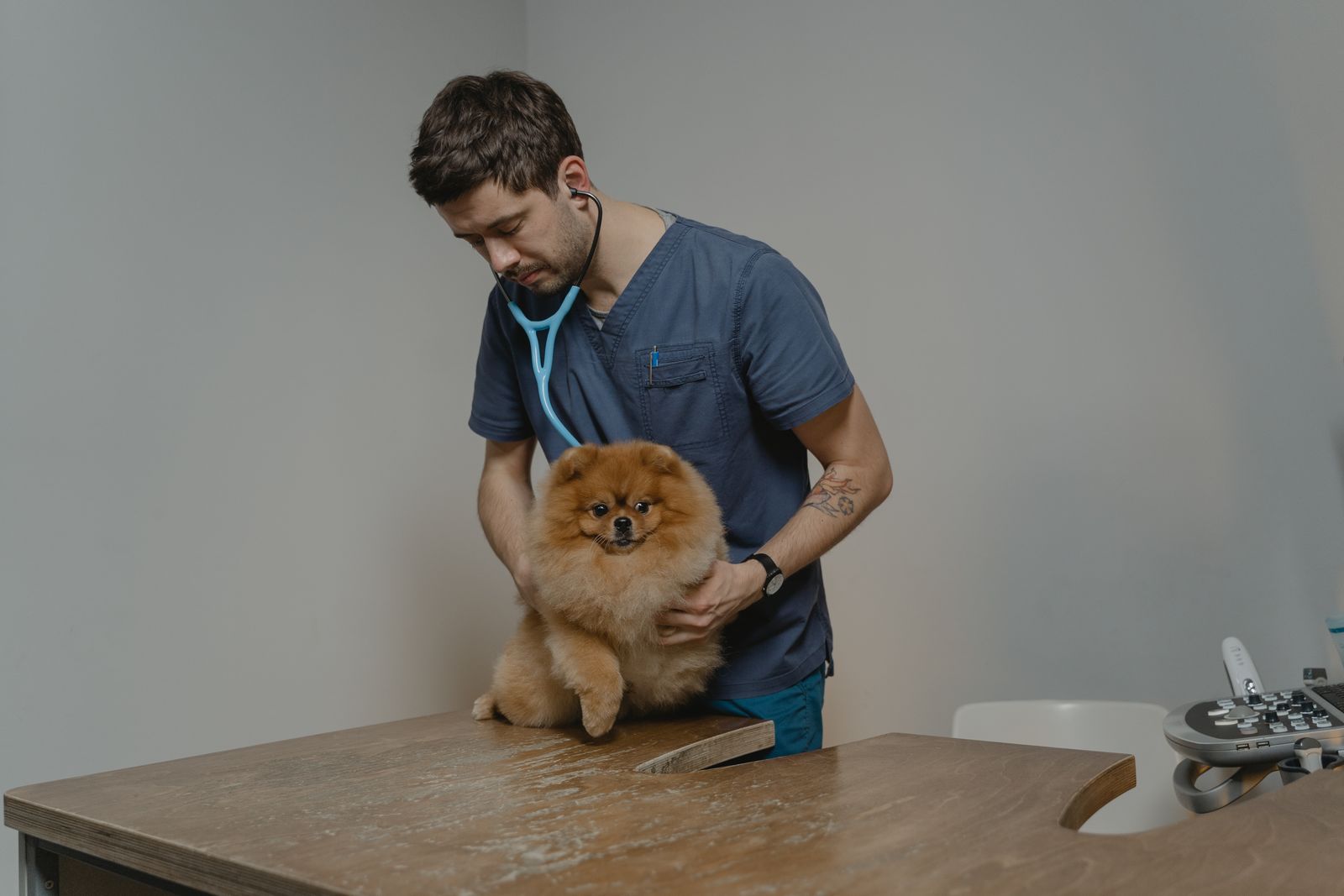
Call on the way. Telling the emergency team what is happening before you arrive lets them prepare — and lets them tell you if urgent care can handle it instead. Photo: Pexels.
How to Prepare So the Bill Never Surprises You
The owners who handle emergency vet bills best are not the richest owners. They are the ones who prepared. Five things, done once, cover most of it:
- Find your emergency hospital now. Save the number. Drive the route. Know whether it is 10 minutes or 40 minutes away, because that changes what you do at 2 a.m.
- Keep a pet first aid kit. Gauze, saline, a digital thermometer, the number for animal poison control (888-426-4435 — a consultation fee applies), and your vet's number. The Red Cross Pet First Aid app is free and walks you through choking, bleeding, and heatstroke step by step.
- Keep a $1,000 to $2,000 emergency fund for the dog. Separate account, not touched for anything else. It is the cheapest insurance there is.
- Consider insurance while the dog is healthy. A $40-to-$70 monthly premium is easy to resent until the night you need it. Compare policies on the cruciate waiting period and the annual limit, not just the monthly price.
- Know what your regular vet covers after hours. Some practices have an on-call vet. Some partner with a specific emergency hospital. Ask at your next visit, when the answer costs nothing.
The Bottom Line
An emergency vet visit costs far more than a routine visit, and the exam fee is the smallest part of it. The exam averages $135 for a dog in 2026 — $107 to $246 depending on where you live — and a visit with bloodwork and X-rays typically runs $1,200 to $1,500. A 24-to-48-hour hospital stay brings the total to $3,000 to $5,000, and emergency surgery starts at $2,000 to $5,000 before the hospital stay. The most common emergencies have predictable prices: vomiting or diarrhea $1,200 to $1,500, toxic ingestion $600 to $900, a limp $700 to $900, a cough $700 to $1,000. The bill is not a rip-off — it is the cost of a hospital that is staffed, equipped, and ready at 2 a.m. The way to survive it is preparation: know your emergency hospital, call on the way, ask for an estimate before treatment starts, and keep a fund or a policy that turns a crisis into a bill you can pay.
My friend's Beagle cost $2,180 that night. She paid it on CareCredit, 0 percent for twelve months, about $182 a month. The dog was home the next evening, slightly embarrassed, entirely fine. She keeps $2,000 in a separate savings account now, and she has the emergency hospital's number saved in her phone. She says the $2,180 was the most expensive thing her dog ever ate — it was a sock — and she would pay it again without thinking. That is the right way to feel about an emergency vet bill: not happy about it, not surprised by it, and never in a position where it decides whether the dog gets care.
Frequently Asked Questions
How much is an emergency vet exam?
The national average emergency exam fee for a dog is $135 in 2026, with a range of $107 to $246. It varies by state: about $108 in Mississippi, $120 in Texas, $133 in Florida, $159 in New York, $180 in California, and $183 in Washington, D.C. University teaching hospitals charge more — $175 at Colorado State and $270 at NC State.
How much does an emergency vet visit cost in total?
A visit with no significant testing usually runs $300 to $500. With bloodwork and X-rays, $1,200 to $1,500. A 24-to-48-hour hospital stay brings the total to $3,000 to $5,000. Emergency surgery starts at $2,000 to $5,000. The total depends entirely on what is wrong and what the workup finds.
What does the emergency exam fee cover?
Intake, triage, the physical exam, and the first discussion of what should happen next. It does not cover bloodwork, X-rays, ultrasound, IV fluids, medication, hospitalization, or surgery — those are all separate line items. A typical workup of exam plus X-rays plus basic bloodwork comes to about $737 for a dog at average prices.
Can I get a payment plan at the emergency vet?
Often, yes. CareCredit and Scratchpay offer 0 percent or low-interest payment plans and are accepted at most emergency hospitals — approval usually takes minutes. Some hospitals offer in-house payment plans if you ask. Nonprofits like RedRover Relief and the Pet Fund offer grants, though they take days to process.
Does pet insurance cover emergency vet visits?
Yes, if the policy is active and the condition is not pre-existing. Emergency care is one of the most common reasons owners file claims, and the average emergency claim for dogs is about $653 — but serious cases run into the thousands. Enroll while the dog is healthy, and check the annual limit and the deductible before you buy.
When should I go to the emergency vet vs. wait until morning?
Go now for trouble breathing, collapse, seizures, a swollen hard belly, uncontrolled bleeding, vomiting or diarrhea with blood, suspected poisoning, a broken bone, or a dog that cannot urinate. Urgent care can handle a mild limp, a small cut, or a single vomiting episode in an otherwise normal dog. If you are unsure, call the emergency hospital and ask — they triage by phone for free.


Comments
Post a Comment