
How to Trim Your Dog's Nails at Home in 2026: The Best Clippers, the Safe Technique, and What It Costs
I can tell you the exact moment I decided to learn to trim my dog's nails myself. It was a Tuesday night, and Biscuit was doing that click-clack walk across the hardwood floor — the sound a dog makes when its nails are so long they hit the floor with every step. I had been paying the groomer $25 every three weeks, and I had just realized I had spent $400 in a year on a job that takes ten minutes. So I bought a $14 pair of clippers, watched two videos, and cut the quick on the very first nail. There was blood on the kitchen floor, Biscuit looked betrayed, and I did not touch the clippers again for a month.
Here is what I know now, after a year of doing it every three weeks: trimming your dog's nails at home is one of the easiest ways to save real money on dog care, and it is also one of the easiest jobs to get wrong in a way that makes your dog afraid of it for months. This guide covers the part nobody tells you — how to find the quick on a black nail, which tool to buy for your dog's size, the step-by-step technique that keeps it calm, and what to do when you cut too far, because you will, once, and it is not a disaster.
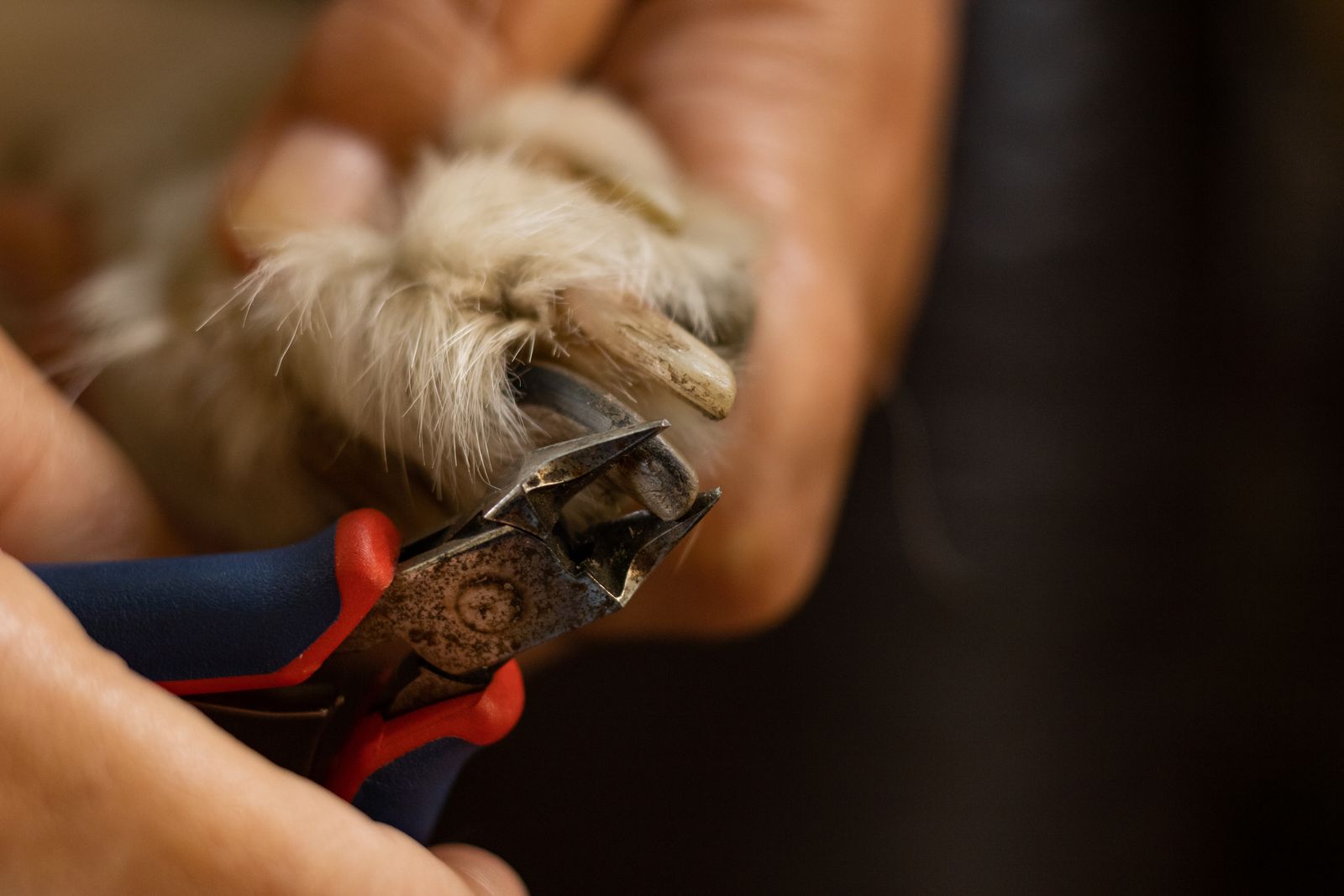
The whole job is ten minutes once you know where the quick is. The first time, go slow — one nail, one treat, one deep breath. Photo: Pexels.
The Short Answer
Most dogs need their nails trimmed every three to four weeks. A professional nail trim costs $15 to $30 at a groomer, $10 to $20 as an add-on at the vet, and a full grooming session with a nail trim runs $40 to $90 depending on the dog's size. Doing it yourself costs $12 to $60 for the tool, once, plus about $6 for a jar of styptic powder that lasts years. The tool pays for itself in two or three trims.
The best clipper for most owners is the Safari Professional Nail Trimmer at roughly $12 to $18 — sharp stainless scissor blades, a tension spring, two sizes. The best value is the Millers Forge red-handle plier clipper at $10 to $15, the one most groomers actually use. If your dog hates the clipping sensation, or has thick black nails where you cannot see the quick, a grinder is the safer choice: the Dremel PawControl 7760-PGK runs $40 to $60 and is the top pick of Wirecutter and Business Insider, while the Casfuy two-speed grinder at about $20 is the best budget option.
The technique, in one sentence: cut small slices off the tip, never more than a sixteenth of an inch at a time, and stop when you see a dark dot in the center of the nail — that dot is the quick, and it means you are done with that nail.
How Often Do Dog Nails Really Need Trimming?
The rule groomers use is simple: if you can hear the nails clicking on a hard floor, they are too long. A dog's nails should just barely touch the ground when the dog is standing — not press into it, not splay the toes apart. Overgrown nails change how a dog walks, and that changes the joints: long nails force the toes apart and put pressure on the paw, which over months can contribute to arthritis and to the kind of splayed, flat-footed stance you see in older dogs that were never trimmed regularly.
How fast nails grow depends on the dog and the surfaces it walks on. A dog that runs on concrete and asphalt every day files its own nails down and might need a trim every five or six weeks. A dog that walks mostly on grass and carpet, or an older dog that barely walks at all, can need a trim every two to three weeks. Small dogs and puppies usually need it more often, because their nails are thinner and grow faster relative to their size. Dewclaws — the thumb-like nails on the inside of the leg — never touch the ground at all, so they grow the fastest and are the ones most likely to curl around and grow into the pad if you forget them. Check the dewclaws every time, even if you only trim the other nails every month.
The cost of not trimming is not abstract. A nail that grows into the pad is a vet visit: an exam at $50 to $100, plus treatment, plus a dog that now associates nail care with pain. A nail that snags and tears — common in long nails on active dogs — is a vet visit too, and a torn nail bleeds a lot and hurts for days. Three weeks and ten minutes is cheaper than both.
Clippers vs. Grinders: Which Tool for Your Dog
There are two kinds of tool, and the right one depends more on your dog's temperament than on your budget.
Scissor or plier clippers cut the nail in one squeeze. They are fast — a confident owner can do all four paws in five minutes — and they cost $10 to $30. The downside is that a single squeeze can go too far, and the snap of the cut startles some dogs. Guillotine clippers, where the nail goes through a hole and a blade slides across it, are the classic design and work well on small dogs with thin nails; on a thick-nailed large dog they crush more than they cut, and most groomers have moved away from them.
Grinders file the nail down with a spinning sanding drum. They are slower — ten to fifteen minutes for all four paws — but they take off tiny amounts at a time, which makes it almost impossible to hit the quick, and they leave a smooth edge instead of a sharp one. They are the right choice for black nails, for thick nails, and for nervous owners. The downside is noise and vibration: some dogs hate the sound, and a long-haired dog's fur can catch in the drum if you are careless.
| Tool | Type | Best for | Price (2026) |
|---|---|---|---|
| Safari Professional Nail Trimmer | Scissor clipper | Most dogs, best overall | $12–$18 |
| Millers Forge Professional | Scissor clipper | Best value, groomer standard | $10–$15 |
| gonicc Professional | Scissor clipper | Safety guard, medium/large dogs | $13–$16 |
| JW Pet GripSoft Deluxe | Scissor clipper | Small dogs, puppies | ~$12 |
| Andis Pet Nail Clipper | Scissor clipper | Large breeds, thick nails | ~$14 |
| Resco Original Deluxe | Guillotine | Small dogs, thin nails | ~$26 |
| Dremel PawControl 7760-PGK | Grinder | All sizes, black nails, nervous owners | $40–$60 |
| Dremel 7300-PT | Grinder | Classic, two speeds | $30–$45 |
| Casfuy 2-Speed | Grinder | Budget grinder, small/medium dogs | ~$20 |
My honest recommendation for most people: buy the Safari or the Millers Forge, spend the $6 on styptic powder, and learn the clipper. If your dog has black nails and you are nervous, buy the Dremel instead — the $40 is cheaper than one emergency vet visit, and you will actually use it, which is the thing that matters. A tool that sits in a drawer because you are afraid of it is the most expensive tool of all.
One more purchase that is worth it: a nail file or a cheap emery board, $3 to $5. After you clip, two or three strokes with the file take the sharp edge off, and it is the difference between a dog that scratches you by accident and one that does not.
Finding the Quick: The Part That Scares Everyone
The quick is the blood vessel and nerve that runs inside the nail. Cut it and the nail bleeds — a lot, for a few minutes — and the dog yelps. It is not dangerous — it is a small vessel, and it stops with pressure and styptic powder — but it hurts, and the dog remembers it. The whole technique is about not cutting it.
On a white or clear nail, you can see it: a pink line running down the center of the nail, visible through the nail itself. Cut a sixteenth of an inch in front of where the pink ends and you are safe. On a black nail, you cannot see it at all, which is why black nails scare people. The method for black nails is to cut tiny slices off the tip and look at the cut surface after each one. At first the cut surface is dry and chalky white. As you get closer to the quick, a dark gray or black dot appears in the center — that is the quick showing through, and it means stop. Take off one more thin slice and you will see a moist, shiny center, which is the quick itself. The dot is your warning. Learn to look for it and black nails stop being scary.
A second rule: cut at a 45-degree angle, with the cutting edge facing the tip of the nail, so the cut follows the natural curve of the paw. Cutting straight across leaves a sharp point. And never cut a nail that is already bleeding, torn, or infected — that is a vet visit, not a home trim.
How to Trim Your Dog's Nails, Step by Step
Do this when the dog is calm, not after a walk or a play session. Ten minutes, a non-slip surface, good light, and a pocket full of treats. If you have never done it before, do two nails on the first day and stop. You are training the dog as much as trimming the nails.
1. Set up before you touch the dog. Clippers, styptic powder, treats, and a towel on your lap or on the floor. Open the styptic powder now — you do not want to be unscrewing a jar with a bleeding nail in your hand. If you are using a grinder, charge it fully and test it on your own thumbnail first so you know the vibration.
2. Get the dog settled. Sit on the floor with the dog lying on its side, or have the dog sit and lift one paw at a time. Some people put a small dog on a table or a counter — a slightly elevated surface makes some dogs hold still. Whatever position you use, it should be one where the dog is relaxed and you can see the nails clearly.
3. Isolate one nail. Hold the paw gently but firmly, and use your thumb and forefinger to push the fur back and extend one nail. Press the pad slightly to push the nail out — this also keeps the toe steady. If the dog pulls away, let go, give a treat, and try again in a minute. Pulling a paw back into your grip is how you teach a dog that nail trims are a fight.
4. Cut a tiny slice off the tip. A sixteenth of an inch — less than you think. Look at the cut surface. Dry and chalky? Take another thin slice. Dark dot in the center? Stop, that nail is done. On a white nail, stop a sixteenth of an inch before the pink ends.
5. File the edge. Two or three strokes with the file, in one direction, to take the sharp point off. This takes five seconds and it is the difference between a clean trim and a scratch down your arm later.
6. Reward after every nail. One treat per nail, every time, even when it goes perfectly. You are building an association — nail trim equals treats — and it is worth more than any technique. If you are trimming a puppy, this is the whole job: the trim is secondary, the association is the point.
7. Check the dewclaws last. They are easy to forget and the most likely to be overgrown. Same technique, same small slices.
If the dog gets stressed — panting, pulling away repeatedly, whale eye — stop. Do two nails today, two tomorrow. A dog that learns nail trims are short and end with treats will let you do all four paws in ten minutes by the third session. A dog that learns nail trims are a twenty-minute wrestling match will hide under the bed when it hears the drawer open.
When You Cut the Quick (and You Will)
It happens to everyone, including groomers. Do not panic, and do not apologize to the dog in a high-pitched voice — the dog reads your tension. Stay calm, press a pinch of styptic powder onto the nail, and hold pressure for thirty seconds. The bleeding stops. Cornstarch or flour works in a pinch if you do not have styptic powder, and a bar of soap pressed onto the nail will seal a small nick. Keep the dog off its feet for a few minutes, give a treat, and finish another nail if the dog is calm — ending on a good note matters more than ending on schedule.
If the bleeding does not stop after five minutes of pressure, or the nail is cracked or torn rather than just nicked, call the vet. That is rare, and it is almost always a torn nail from an accident, not a home trim — but do not try to treat a cracked nail yourself.
DIY vs. Professional: The Real Cost Comparison

A groomer charges $15 to $30 for this ten-minute job. Once you can do it calmly at home, that is $250 to $500 a year back in your pocket. Photo: Pexels.
Here is the honest math, for a dog that needs a trim every three weeks — about seventeen trims a year.
| Option | Per trim | Per year |
|---|---|---|
| DIY with clippers | $0 after the first purchase | $12–$18 for the tool, $6 for styptic powder |
| DIY with a grinder | $0 after the first purchase | $20–$60 for the tool |
| Groomer nail trim only | $15–$30 | $255–$510 |
| Groomer, as part of a full groom | $40–$90 per groom | $320–$720 (every 6–8 weeks) |
| Vet nail trim (add-on) | $10–$20 | $170–$340 |
The DIY route saves $250 to $500 a year, which is real money — about the cost of a year's worth of flea and tick prevention. But the honest version of this comparison is that some dogs are not DIY dogs. A dog that bites, a dog that panics so hard it injures itself, a dog with severe arthritis that cannot hold a position, or a dog with a medical condition affecting the nails — those dogs belong with a groomer or a vet, and the $25 is money well spent. There is no prize for doing it yourself if the dog is miserable.
A good middle ground, and the one I recommend to friends who are nervous: pay the groomer to do it twice, watch closely, and ask questions. Most groomers will show you where the quick is on your dog's nails and let you watch the technique. Then buy the clippers and do it at home. Two paid trims at $50 total is a cheap lesson, and it is the fastest way to stop being afraid of the quick.
Mistakes That Make Nail Trims Harder
Waiting too long between trims. The quick grows with the nail. A nail that has not been trimmed in two months has a quick that reaches almost to the tip, which means you can barely cut anything without hitting it — and the only fix is trimming a little every week for a month while the quick recedes. Little and often beats rare and dramatic.
Using dull clippers. A dull blade crushes the nail instead of cutting it, which hurts and can split the nail. If the clippers do not cut cleanly on the first squeeze, replace them. A $14 pair of clippers is a consumable, not an heirloom — replace it once a year.
Trimming right after a bath. Wet nails are softer and more likely to split, and a wet dog is a wiggly dog. Trim dry, on a dry surface.
Forgetting the dewclaws. They never touch the ground, so they never wear down, and they are the first nails to curl into the pad. Check them every time.
Making it a big event. The dogs that hate nail trims the most are the ones whose owners turn it into a production — chasing the dog, cornering it, holding it down. Five minutes, two nails, treats, done. Boring is the goal.
The Bottom Line
Trimming your dog's nails at home costs $12 to $60 for the tool and about ten minutes every three weeks, and it saves $250 to $500 a year over a groomer. The Safari Professional at $12 to $18 is the best clipper for most owners, the Millers Forge at $10 to $15 is the best value, and the Dremel PawControl at $40 to $60 is the best grinder for black nails and nervous owners.
The technique is smaller than people think: tiny slices, watch the cut surface for the dark dot, stop there, file the edge, treat after every nail. Do two nails the first time. Do it again in three days. By the third session, it is a ten-minute routine, and the click-clack on the hardwood floor stops — which, if you have been listening to it for a month, is worth the $14 all by itself.
Frequently Asked Questions
How often should I trim my dog's nails?
Every three to four weeks for most dogs. Dogs that walk on concrete daily may go five or six weeks; dogs on grass and carpet, puppies, and older dogs often need it every two or three weeks. If you hear clicking on hard floors, the nails are already too long.
How do I find the quick on black nails?
Cut thin slices off the tip and look at the cut surface after each one. It starts dry and chalky white. When a dark dot appears in the center, you are at the quick — stop. On white nails you can see the pink quick through the nail; stop a sixteenth of an inch before the pink ends.
What should I do if I cut the quick?
Stay calm, press styptic powder onto the nail, and hold pressure for about thirty seconds — the bleeding stops. Cornstarch or flour works if you do not have styptic powder. Give a treat and end on a calm note. If bleeding does not stop after five minutes of pressure, call the vet.
Are nail grinders better than clippers?
Grinders are safer for black nails and nervous owners because they remove tiny amounts at a time, and they leave a smooth edge. Clippers are faster and cheaper, and better for thick nails. Most groomers use clippers; most nervous first-time owners do better with a grinder. Either one works if the tool is sharp and the technique is patient.
How much does a professional nail trim cost?
A nail trim alone costs $15 to $30 at a groomer and $10 to $20 as an add-on at the vet. A full grooming session with a nail trim runs $40 to $90. At a trim every three weeks, that is $255 to $510 a year — against $12 to $60 once for a DIY tool.


Comments
Post a Comment